Choose the model by deciding where the product starts and who controls each decision. Private label usually starts from a supplier’s existing or baseline product; OEM usually starts from a buyer-controlled specification or design; custom manufacturing usually involves broader joint development of a product for a particular programme.
Those are working descriptions, not universal legal definitions. Suppliers use the terms differently, and one programme can combine elements of all three. Before requesting a quote, agree the starting product, permitted changes, design authority, development work, intellectual-property rights, testing, packaging, minimums, charges and approval responsibilities in writing.
The three models are a spectrum, not fixed boxes
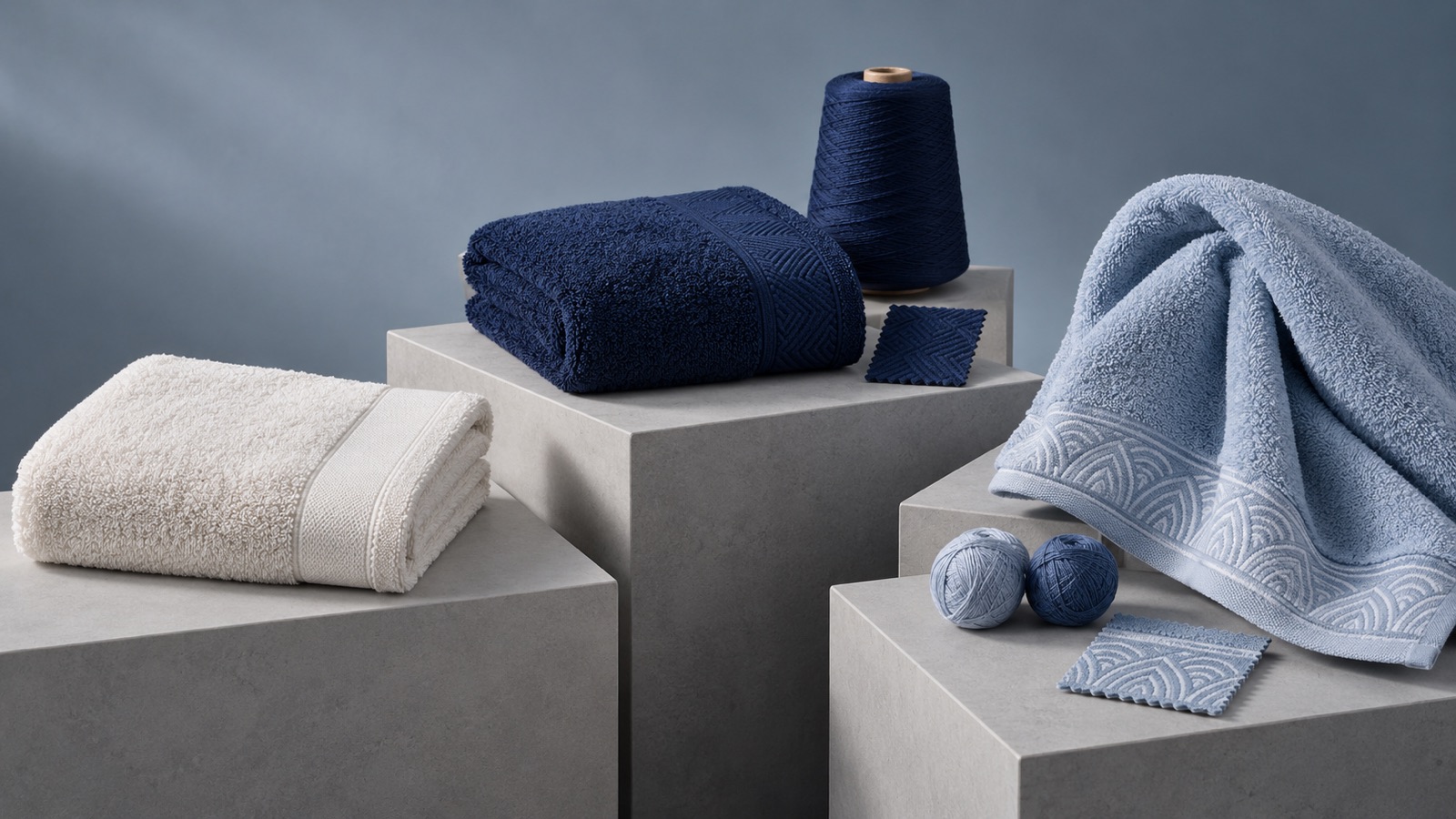
A catalogue towel with a buyer’s label is easy to recognise as private label. A towel produced from a detailed buyer-owned construction and artwork is often called OEM. A new size, pile, border, colour system and packaging range developed through sampling may be called custom manufacturing. In practice, the boundaries blur: a private-label base may receive a custom border, while an OEM brief may ask the factory to propose yarn and finishing details.
Do not choose a supplier from the model name alone. Ask the supplier to describe what the term includes for this programme and repeat that scope in the quotation, specification, sample approvals and purchase agreement.
Working comparison for towel buyers
| Model | Typical starting point | Buyer control | Development work | Often fits |
|---|---|---|---|---|
| Private label | Supplier’s existing or baseline towel construction | Brand, selected colours, labels, packaging and agreed options | Selection, colour/sample confirmation and presentation changes | A range needing a defined starting product and limited controlled changes |
| OEM | Buyer’s specification, reference construction, design or technical brief | Higher control over required product attributes and acceptance criteria | Manufacturability review, engineering detail, samples and validation | A buyer with a controlled product definition and approval capability |
| Custom manufacturing | A use case, design direction or new range requirement | Agreed jointly; can be broad but evolves through development | Construction proposals, iterations, artwork, colour, packaging and test planning | A differentiated programme that justifies more decisions and sampling |
None of these labels guarantees lower price, lower minimums, faster sampling or exclusive ownership. Those outcomes depend on the actual construction, materials, colours, branding, packaging, order scope and agreement.
1. Product definition and design control
Private label reduces product-definition work only when the supplier can identify the baseline construction precisely. Record its fibre content, finished dimensions, GSM or piece weight, yarn and pile description, colour route, border, hems and finish. Then list which elements the buyer may change without creating a different development path.
In OEM work, the buyer normally brings a more controlled brief. That control also creates responsibility: the buyer must issue one current specification, resolve conflicts between artwork and measurements, define tolerances and approve changes. Custom development sits between concept and production detail, so the parties should mark each field as buyer-required, supplier-proposed or jointly approved. The towel specification-sheet guide provides a field-by-field structure.
2. Development, samples and change control
Agree what each sample is intended to approve. A colour lab dip, artwork strike-off, development sample and production-intent sample answer different questions, even when suppliers use different names. State the materials and processes represented, who pays any development charge, how many revisions are included, who may approve, and whether approval releases bulk production.
Private-label programmes may need fewer structural iterations, but colour, labels and packaging still require approval. OEM and custom programmes may require more construction work before a stable commercial offer is possible. After every accepted change, update the controlled specification rather than relying only on email or the physical sample. Use the sample approval checklist to record dimensions, GSM, colour, construction, branding, workmanship, packaging and agreed tests.
3. Artwork, intellectual property and confidentiality
Supplying a logo or design file does not by itself define ownership, permitted use or rights in later development. WIPO advises supplier agreements to distinguish pre-existing or background IP from results created during the engagement, define access and use, address confidentiality, and state what happens at termination. Apply that thinking to logos, jacquard files, embroidery files, colourways, packaging artwork, technical drawings, samples and any supplier-developed construction.
A trademark licence normally permits use without transferring ownership; WIPO’s trademark guide recommends written licensing terms and notes that owners often retain quality control. Give the manufacturer only the brand-use authority required for the programme and define approvals, territories, products and end-of-project handling with qualified advisers.
If commercially sensitive information must be shared, define what is confidential, who may access it, permitted purpose, duration, security and return or destruction. The WIPO trade-secrets guide identifies confidentiality clauses and non-disclosure agreements as contractual measures and stresses clear definition of protected information. This article is manufacturing guidance, not legal advice; ownership and enforcement depend on the applicable law and contract.
4. Testing and compliance responsibility
The model name does not decide who selects tests, supplies standards, pays laboratories or approves results. Define the intended use and destination, then assign responsibility for the test plan, sample submission, method edition, pre-treatment, pass limits, reports and corrective action. For example, AATCC TM79-2025 determines water absorbency for textiles, but the buyer and supplier still need to agree when it applies and what result is acceptable.
Labelling also follows destination rules rather than the words OEM or private label. The US FTC Textile Fiber Rule and EU Regulation 1007/2011 illustrate different legal frameworks for fibre-composition information. ISO 3758:2023 establishes a care-symbol system but excludes industrial laundering. Name the destination and sales channel, identify the responsible party, and have qualified specialists confirm applicable requirements.
5. Packaging and commercial confirmation
Private label often places more buyer-visible differentiation in labels and packaging; OEM and custom programmes may integrate product and pack development. In every model, define label copy and material, attachment, fold, individual pack, assortment, barcode or sticker, units per carton, carton marks and approval artwork. State whether components are buyer-supplied, nominated or factory-sourced and who bears rework when late artwork changes.
Before committing, confirm in writing:
- the model’s project-specific definition and the baseline or controlled specification;
- buyer and supplier deliverables, decision owners and approval gates;
- minimums, quantity tiers, development or setup charges and tooling ownership;
- sample scope, revision allowance, testing and compliance responsibilities;
- artwork/IP permissions, confidentiality and handling after termination;
- packaging scope, price basis, payment proposal, timing assumptions and delivery terms;
- change-control process and precedence among specification, sample, artwork and purchase order.
Use a structured custom towel RFQ so different offers expose their assumptions. Commercial definitions must be confirmed with the selected manufacturer; no label on the sourcing model replaces the quotation and contract.
Which model should you choose?
Choose private label when a documented baseline product meets the use case and differentiation can focus on controlled options, brand and presentation. Choose an OEM-led route when your team already owns a clear product specification and can manage approvals. Choose broader custom development when the desired towel cannot be defined responsibly without construction proposals and iterative sampling.
Son Ha Textile’s factory team in Phùng Xá, Hanoi can discuss these routes against the intended towel range and the company’s stated manufacturing capabilities. The scope, minimums, development work, timing, testing, commercial terms and rights for a particular programme must be reviewed and confirmed before ordering.
Questions buyers often ask
Is OEM always fully designed by the buyer?
No. Some suppliers use OEM for any product made under another brand, while others expect a detailed buyer specification. State exactly which design and engineering decisions belong to each party.
Is private label the same as adding a logo to a stock towel?
Sometimes, but not always. A private-label offer may include selected colours, sizes, borders, labels and packaging around a baseline construction. Ask for the baseline specification and permitted options.
Who owns custom artwork or development files?
Do not infer ownership from who paid or who created the brief. Identify background IP, new outputs, licences, permitted uses, source-file delivery and post-termination handling in a written agreement reviewed for the applicable law.
Which model has the lowest MOQ?
There is no universal answer. Minimums can be driven by yarn, dyeing, weave, colour count, logo method, size mix, packaging and production planning. Ask for the minimum and its basis for the exact offered scope.
Sources
- IP Agreements with Suppliers: What Ventures Need to Know — World Intellectual Property OrganizationAccessed 5 October 2026
- WIPO Guide to Trade Secrets and Innovation — Part IV: Trade secret management — World Intellectual Property OrganizationAccessed 5 October 2026
- Making a Mark: An Introduction to Trademarks for Small and Medium-sized Enterprises — World Intellectual Property OrganizationAccessed 5 October 2026
- AATCC TM79-2025 — Test Method for Absorbency of Textiles — AATCCAccessed 5 October 2026
- Textile Fiber Rule — United States Federal Trade CommissionAccessed 5 October 2026
- Regulation (EU) No 1007/2011 on textile fibre names and related labelling and marking — European UnionAccessed 5 October 2026
- ISO 3758:2023 — Textiles — Care labelling code using symbols — International Organization for StandardizationAccessed 5 October 2026
A note on specifications
Product performance, minimum order quantities, lead times, pricing and compliance requirements depend on the final specification, testing standard, order volume and destination market. This article provides general manufacturing information; confirm requirements with the factory and appropriately qualified testing, compliance and logistics advisers before ordering.